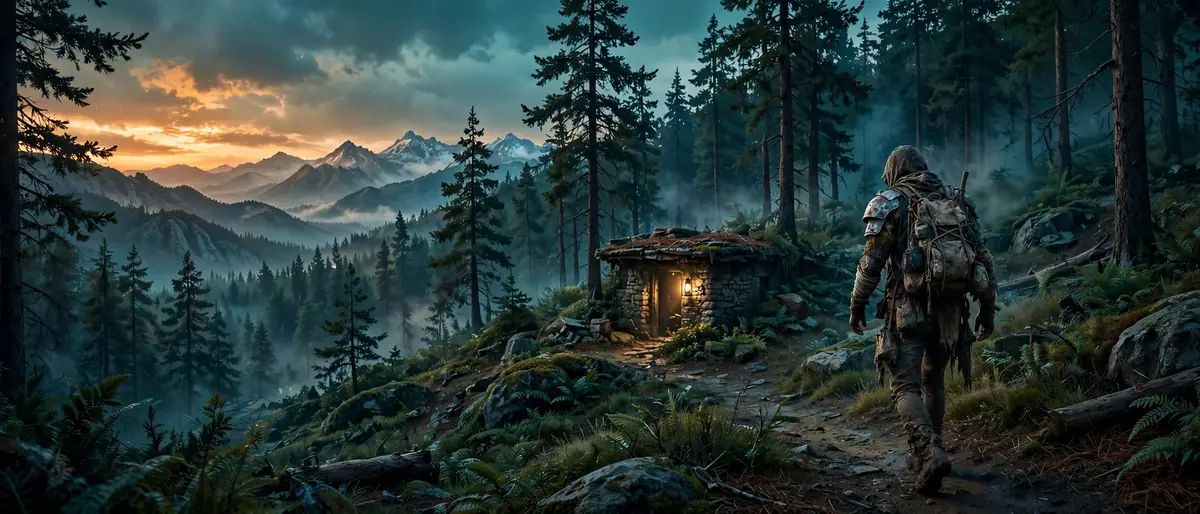
Solo is the hardest way to play Rust. Groups have eyes, guns, and someone covering the door while they craft. You have one pair of hands, one respawn timer, and a base that sleeps when you do.
But being alone is also a strategy. Nobody can betray you, your base is small enough that raiders scroll past it, and since September 2026’s Breach and Clear update, large groups pay a tiered upkeep tax — up to triple upkeep for true zergs, while a solo pays zero extra.
This is the solo player’s playbook: surviving wipe day, building a base that isn’t worth raiding, running monuments without dying, making allies without joining a zerg, and late-wipe goals that don’t need five friends.
New to Rust entirely? Start with our Rust 2026 beginner guide — your first minutes, building, blueprints, and the mistakes that kill beginners. Then come back.
✅ Verified for Rust — October 2026 (PC version; checked against Facepunch patch notes and the current wiki).
Pick the Right Server: Your Biggest Solo Decision
On an official high-pop server you’re a speedbump for zergs; on a well-chosen community server, solo play is a fair fight — so choose well.
Look for solo/duo/trio servers — these cap team sizes (usually 2–3 players) and exist so lone players aren’t fighting zergs. Find them labelled “Solo”, “Solo/Duo” or “Solo/Duo/Trio” in the server browser and on trackers like BattleMetrics. Fewer raids on you, and fairer fights when they happen.
Also favour a fresh wipe, active moderation, and a moderate population. Some community servers offer offline raid protection via plugins — not vanilla, so don’t expect it on officials.
Wipe Day Gameplan: The First Hours Set Your Whole Wipe
Wipe day is chaos — everyone spawns at once and every clan rushes monuments. Your job: get a secure foothold while the clans fight each other. Be there for the wipe itself, so you progress alongside everyone else instead of fighting geared groups with a bow.
Scout before you commit. Pick your base spot before you farm — dying to beach campers costs nothing if you haven’t gathered yet. Somewhere out of the way with a road and small monuments nearby: roads are your scrap highway, small monuments your progression.
Stay invisible on day one. Don’t fight — a naked with a rock loses every fight that matters. Move inland, stay off main roads during peak chaos, and bank what you gather often. Make frequent small trips instead of one greedy run.
One 2026 gift: Breach and Clear added monument blockers to red-keycard puzzle rooms, slowing the clan rush to endgame loot — the delay lands on wipe day, exactly when solos need it. And get a base down fast: a wooden 2×2 with a door beats getting jumped while carrying stone for a fancy one.
Your Solo Base: Small, Hidden, and Built to Lose
The golden rule: a base that isn’t worth raiding beats a base that survives a raid. A small, hidden stone base costs raiders more in explosives than they’d ever get back. A sprawling compound screams “come find out what’s inside.”
The classic solo starter is the 2×2 with a triangle airlock: two-by-two foundations of enclosed core, plus a triangle foundation at the entrance giving you two doors in series. One open door is how solos lose everything; two doors is how they survive one mistake.
1. Place your Tool Cupboard first and authorize yourself — no TC means anyone can claim your base.
2. Upgrade the core to stone fast — stone forces raiders to spend real explosives; wood just burns.
3. Use code locks, not key locks — a looted key opens everything; a code can’t be stolen.
4. Add honeycomb when you can afford it — extra wall layers around the core, each costing raiders another round of explosives.
5. Spread loot across separate rooms — explosive splash can open two adjacent loot rooms for the price of one.
Run multiple small bases: cheap 2x2s dotted around the map give you fallback points and keep scouts guessing. A decoy base near a hotspot absorbs curious raiders while your real base sits quietly off the roads. Build tucked into terrain: since the 2025 fog update hides unexplored map areas, a base nobody walks past is a base nobody raids. Hidden beats fortified.
Defend like you won’t be home — you won’t be. Shotgun traps are the solo’s best friend, but only where raiders can’t see them from any angle: a visible trap gets drained from safety; a hidden one stops a raid cold. Keep the TC in a sealed compartment unreachable from the airlock, and never build bigger than you can afford to keep stocked — an unfed base decays on its own.
Monument Running Order for Solos
Monuments hold the real loot — and the clans. Run them in the right order, at the right time, and a solo progresses fine. The keycard ladder is the same green → blue → red path everyone uses; the solo difference is which monuments and when.
Early (naked to clothed): the quiet ones — Lighthouse, Supermarket, Gas Station. No radiation, no keycard, food and medical crates, a recycler nearby. Your scrap drip feed.
First puzzles: the Dome needs no keycard — go with clothes, meds, and a bag nearby. Sewer Branch and Satellite Dish are the natural next green/blue step.
Mid-game: Airfield, Power Plant, Train Yard, Water Treatment need blue/red keycards and fuses, and they’re clan magnets — run them off-peak, in and out, never linger.
Endgame (Launch Site, Military Tunnels): red keycard, multiple fuses, high radiation, elite crates — clan territory at prime hours. Your window is right after wipe, when monument blockers slow everyone down, or deep off-peak. Never naked, never without meds, always with a bag nearby.
Two solo rules: recycler runs beat node farming — barrel components recycled at recyclers give scrap and gear faster and quieter than standing at a node. And always alt-look on the way home so you’re not followed to your door.
Avoiding Raids (and Surviving the Ones You Can’t)
Honest truth: you will get raided. Every solo does. The goal isn’t a raid-proof base — it’s making raiding you unprofitable, and making sure a raid doesn’t end your wipe.
Don’t look worth it. Raiders do math — if your base costs 8 rockets to open and holds a Tier 1 bench and some cooked meat, they go elsewhere. Small footprint, lights off, furnace smoke minimal.
Assume every trip home is watched. The classic solo death is getting followed back with a full inventory. Before you walk through your door, spin the camera (alt-look) and check — don’t show anyone where you live.
Spread your wealth. Never keep everything in one base. Secondary 2x2s, boxes in odd map corners — a solo with three modest bases is harder to wipe out than a group with one fortress. Get raided and you should be able to grab a bag elsewhere and rebuild within the hour.
Know the map’s personalities. Track who lives near you and which groups are kill-on-sight. The contacts system and player list are intelligence tools — knowing which base belongs to whom is the difference between a smart revenge raid and an ambush.
Know when to fold. Outnumbered five to one with your base door-camped? Your loot is already gone — log off, come back later, rebuild from a stash.
Making Allies Without Joining a Zerg
Solo doesn’t mean friendless. The smartest solo players are diplomats: they trade, they talk, they team up temporarily — and they never hand over the keys.
The team system is your tool. On PC: open inventory (Tab), click Create Team bottom-left, walk up to the player and press E. Teammates show as green dots above their heads and on your map (up to 8 players, though most servers cap lower). Two critical facts: team membership gives zero access to your base (that’s the Tool Cupboard’s job), and you can kick as fast as you invited. Temporary teams for monument runs are common; permanent teams are a commitment.
Trade instead of raid. Outpost and Bandit Camp are safe zones with shops and vending machines — buy what you need, sell what you farm. The 2026 Apartment Complex monument added rentable shops. A solo who sells components and buys meds progresses without firing a shot.
Talk to your neighbours. The friendly solo who waves and trades becomes a neighbour, not a target. Build trust slowly, in-game, over days — never from a global chat message asking “anyone want to team?”
Standing warning: never let anyone inside your base until trust is earned over real time. Betrayal is the oldest Rust tradition — a week of good behaviour doesn’t earn your door codes.
2026 Updates That Actually Help Solos
Rust’s 2026 has been mixed for lone players — some updates openly favoured clans, and the community said so loudly. But several changes genuinely tilt toward solos.
The zerg upkeep tax (Breach and Clear, September 2026). Tool Cupboards now apply a tiered upkeep tax based on players connected to a base — TC auths, anyone deauthed in the last 24 hours, even code-lock access. First four players: nothing extra. Players 5–10: 2% each. Beyond ten: 4% each, up to 300%. Solos pay zero extra.
Monument blockers (Breach and Clear). Red-keycard puzzle rooms are now gated by blockers that slow the clan rush to endgame loot. They decay after 24 hours — the effect lands on wipe day, when solos need it.
The clan system (Common Ground, 2026). Clans are now formal and structured, with a clan table — more organized, but also more visible. A solo who watches clan politics can play groups against each other without picking a side.
The farm economy (Livestock Update, September 2026). Breedable cows and sheep, and the Biofuel Generator turns organic matter into low-grade fuel. For a solo: quiet at-home fuel production — no more risky fuel runs — plus trade goods for the Outpost shops.
Late-Wipe Goals for a Solo
Surviving the first days is half the game. A solo with a back-half plan stays dangerous instead of stagnating.
Get your Tier 3 bench and learn the AK. The assault rifle blueprint (500 scrap to research) is the single biggest power jump a solo can make. Protect your scrap like it’s your base, because it basically is.
Roam for kits, don’t hoard for raids. Solos rarely have the explosives economy to crack fortresses — you don’t need it. Roam monuments and roads with a solid kit, take fights you can win, and snowball off other players’ loot.
Become the server’s trader. A stocked vending machine at Outpost or a rented Apartment Complex shop makes you a fixture, not a target. Sell ammo, meds, components; buy sulfur and high-quality metal. Economic solos get left alone because everyone uses their shop.
Raid like a solo. Pick targets your size: other solos and duos, hit off-peak. A couple of satchels on a 2×2 door is a profitable raid; eight rockets on a clan compound is a donation. Know when your target is offline before you spend a single explosive.
Prepare for the next wipe. The last days are for experiments: a new base design, a monument puzzle you never learned. Progress resets on the first Thursday of every month — the skills don’t.
Your First 60 Minutes: The Solo Checklist
☐ Minutes 0–10: Spawn, gather wood and stone with your rock, collect cloth from hemp. Craft stone hatchet and pickaxe.
☐ Minutes 10–20: Scout the map and pick your base spot — inland, off the roads, near a small monument but not on top of it.
☐ Minutes 20–30: Craft a sleeping bag (30 cloth) and place it somewhere safe before you build. Then place your 2×2 starter, TC first, authorize yourself.
☐ Minutes 30–45: Upgrade the core to wood, add a door and code lock, start smelting. Smash road barrels for scrap.
☐ Minutes 45–60: Upgrade to stone, add the triangle airlock, place a second hidden sleeping bag elsewhere on the map, and bank your first scrap run at a recycler.
Skip the bag and the TC and you’re a cautionary tale.
Frequently Asked Questions
Is Rust worth playing solo in 2026?
Yes — arguably more than ever. Solo/duo/trio servers cap group sizes so you’re not fighting zergs, and Breach and Clear (September 2026) added a real upkeep tax on large groups (up to triple upkeep) while solos pay nothing extra. Harder, but fair on the right server.
How do I avoid getting raided as a solo?
You can’t avoid it entirely — every solo gets raided. Make it unprofitable: build small and hidden, spread loot across multiple bases, depot often, never show anyone where you live. A base that costs more to raid than it’s worth gets skipped.
What is the best solo base design in Rust?
The classic: a 2×2 with a triangle airlock — compact, cheap to upgrade to stone, two doors in series so one mistake doesn’t cost you everything. Add honeycomb around the core as you can afford it, keep the TC sealed, and place shotgun traps where raiders can’t see them from any angle.
Should I join a team or stay solo?
Both work — they’re not opposites. Use the team system (Tab → Create Team, then E on a player) for temporary alliances like monument runs: teammates show as green dots. Team membership gives nobody base access, and you can leave or kick just as fast. Never share door codes until trust is earned over real time.
What changed for solo players in Rust’s 2026 updates?
Three: Breach and Clear (September) added a tiered upkeep tax on groups larger than four (solos pay zero extra) plus monument blockers that slow the clan wipe-day rush, and the Livestock Update added the Biofuel Generator — quiet at-home fuel production for solos.
🎮 More Beginner Guides: Rust 2026 Beginner Guide · DayZ Beginner Guide 2026 · ARK Beginner Guide · Project Zomboid (Build 42) Guide
Solo isn’t the easy mode of Rust — it’s the honest one. No one carries you, no one betrays you, and everything you build is yours. Build small, stay quiet. See you out there, lone wolf.